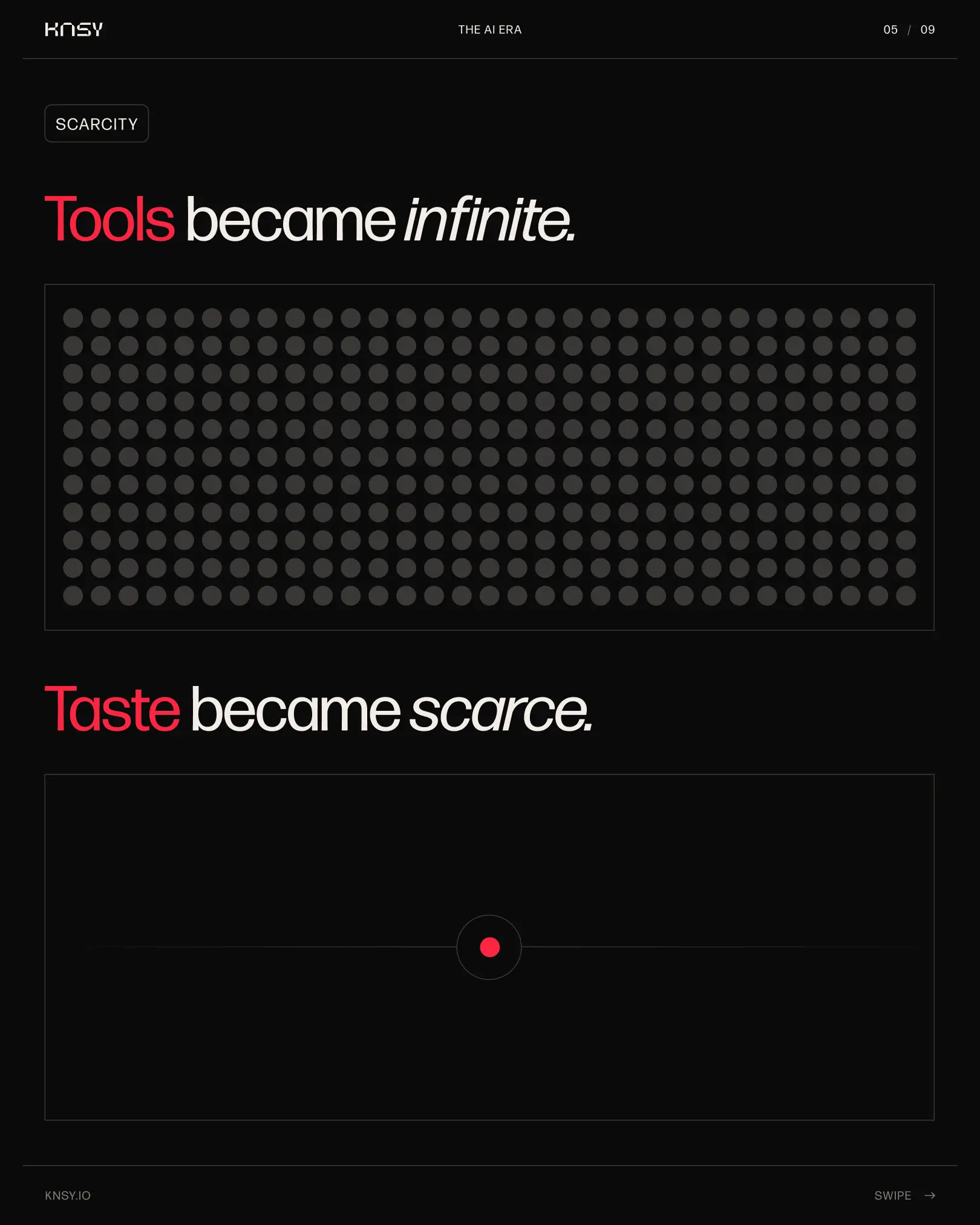


For most of the last decade, the biggest advantage a business could have was speed. Whoever moved fastest, produced the most, tested the quickest, won. Volume was a competitive moat. Output was the metric.
AI just made that moat irrelevant.
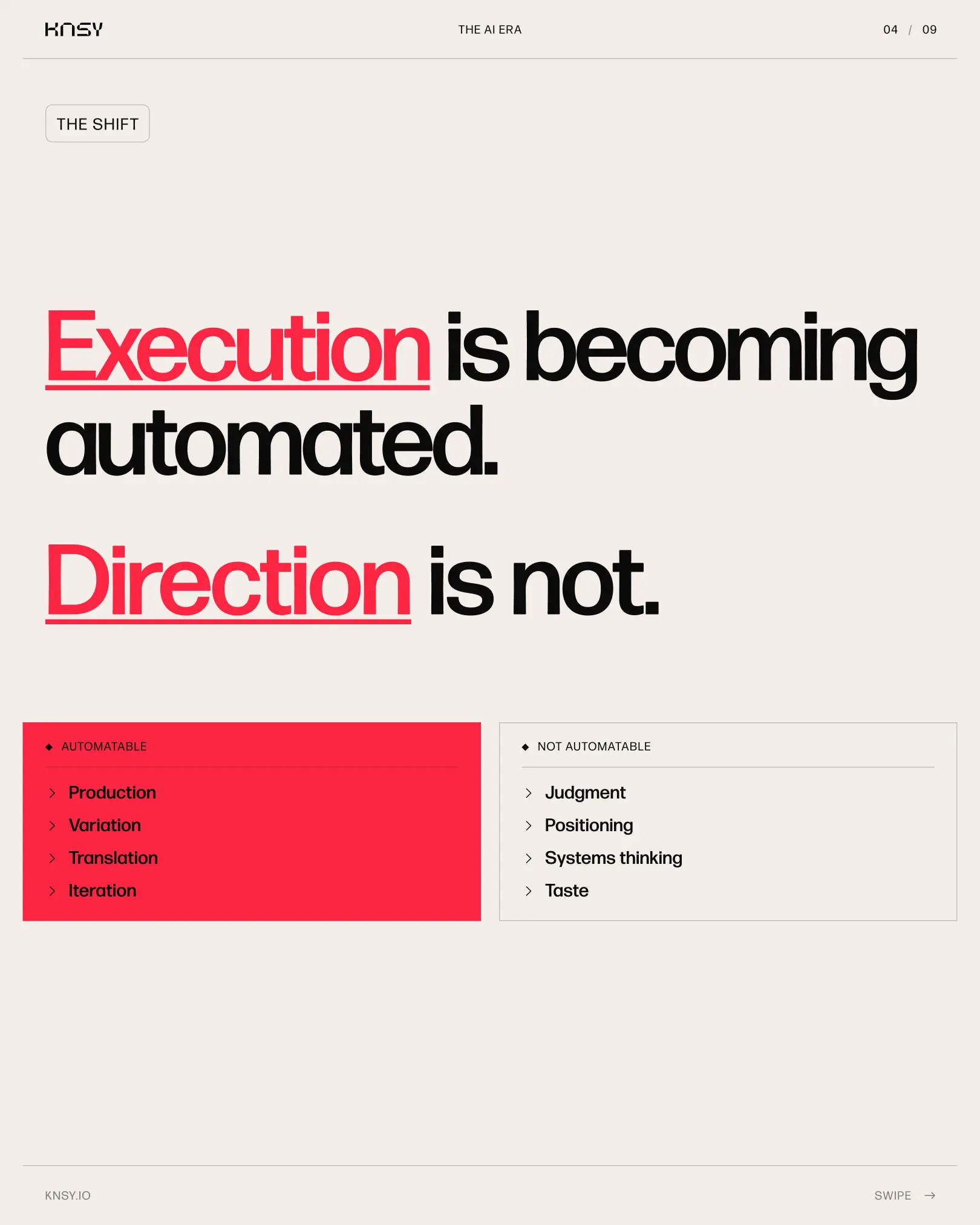
Production, variation, iteration, research are the things that used to take time. Headcount, and budget are now effectively free. Not cheaper. Free. And when something that was once scarce becomes abundant, the thing that replaces it in value is whatever cannot be automated. Right now, that is judgment. Positioning. Systems thinking. Taste.
AI is not removing jobs. It is removing average. And that is a very different problem.
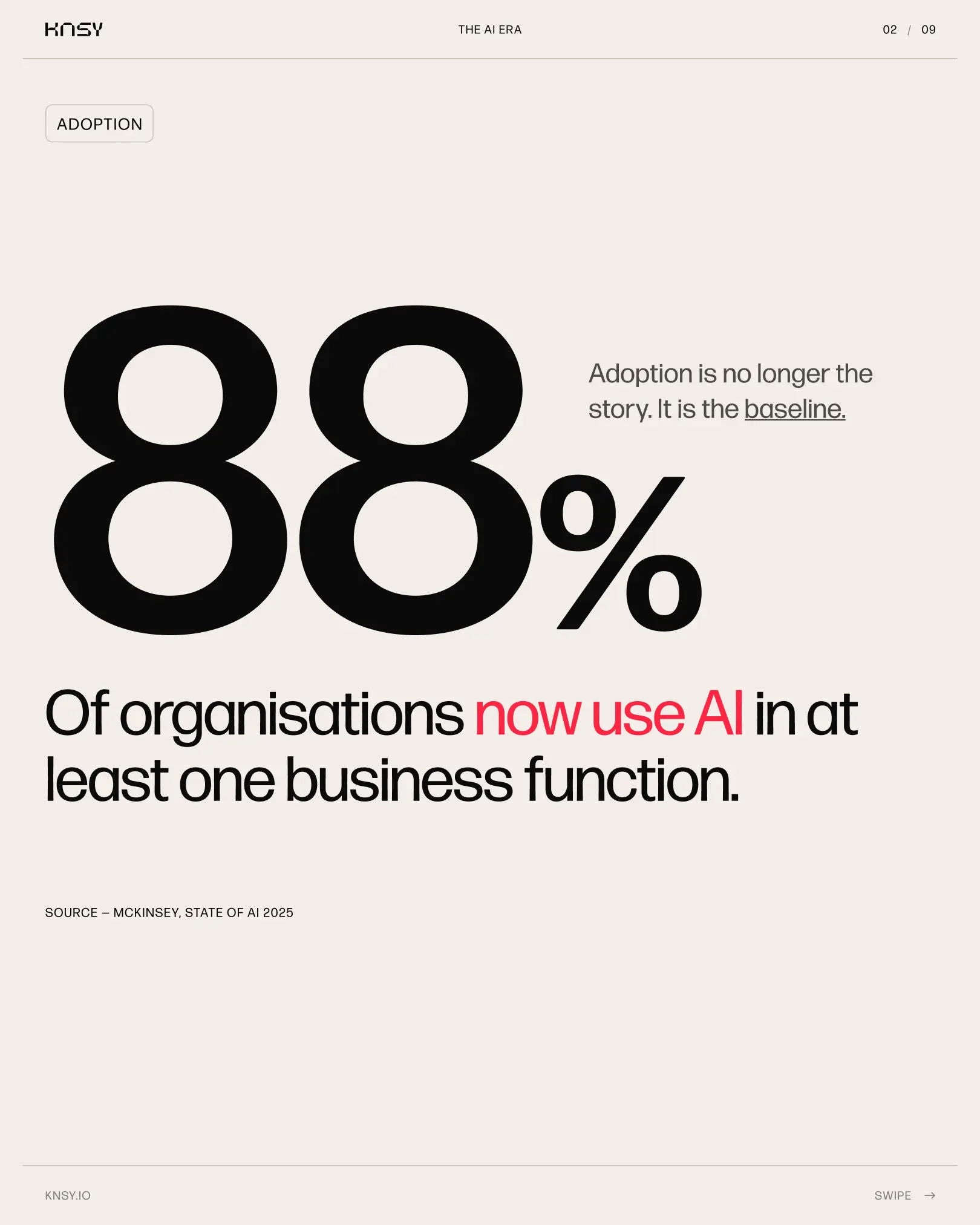
According to McKinsey's State of AI 2025, 88% of organisations now use AI in at least one business function. Read that again. Nearly nine in ten. The conversation about whether to adopt AI is already over. The question now is what you are actually doing with it.
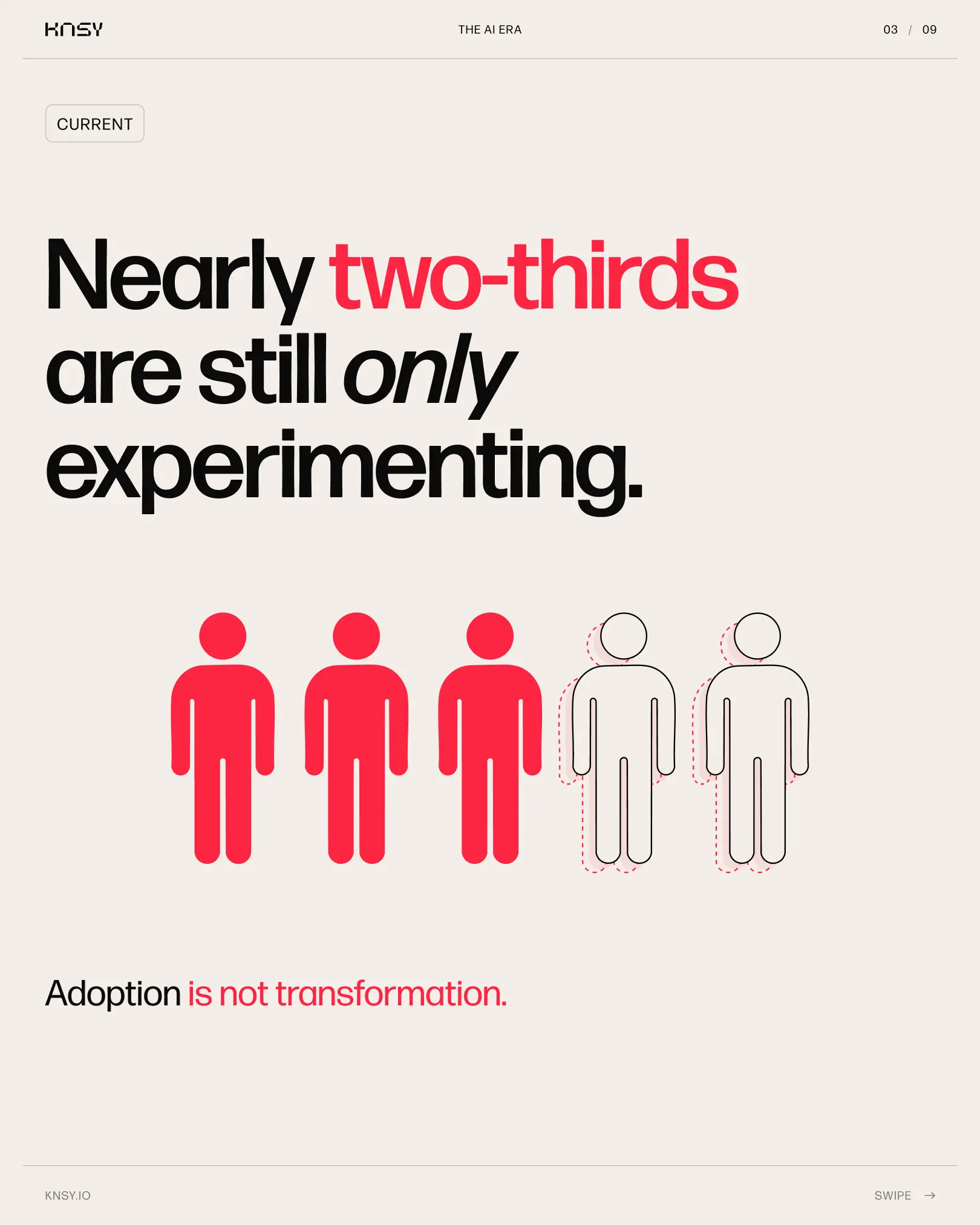
Because here is what the data also shows: nearly two thirds of those organisations are still only experimenting. Running pilots. Testing tools. Dabbling. Adoption without transformation is just a more expensive version of the status quo. Having the tools does not mean you are using them well.
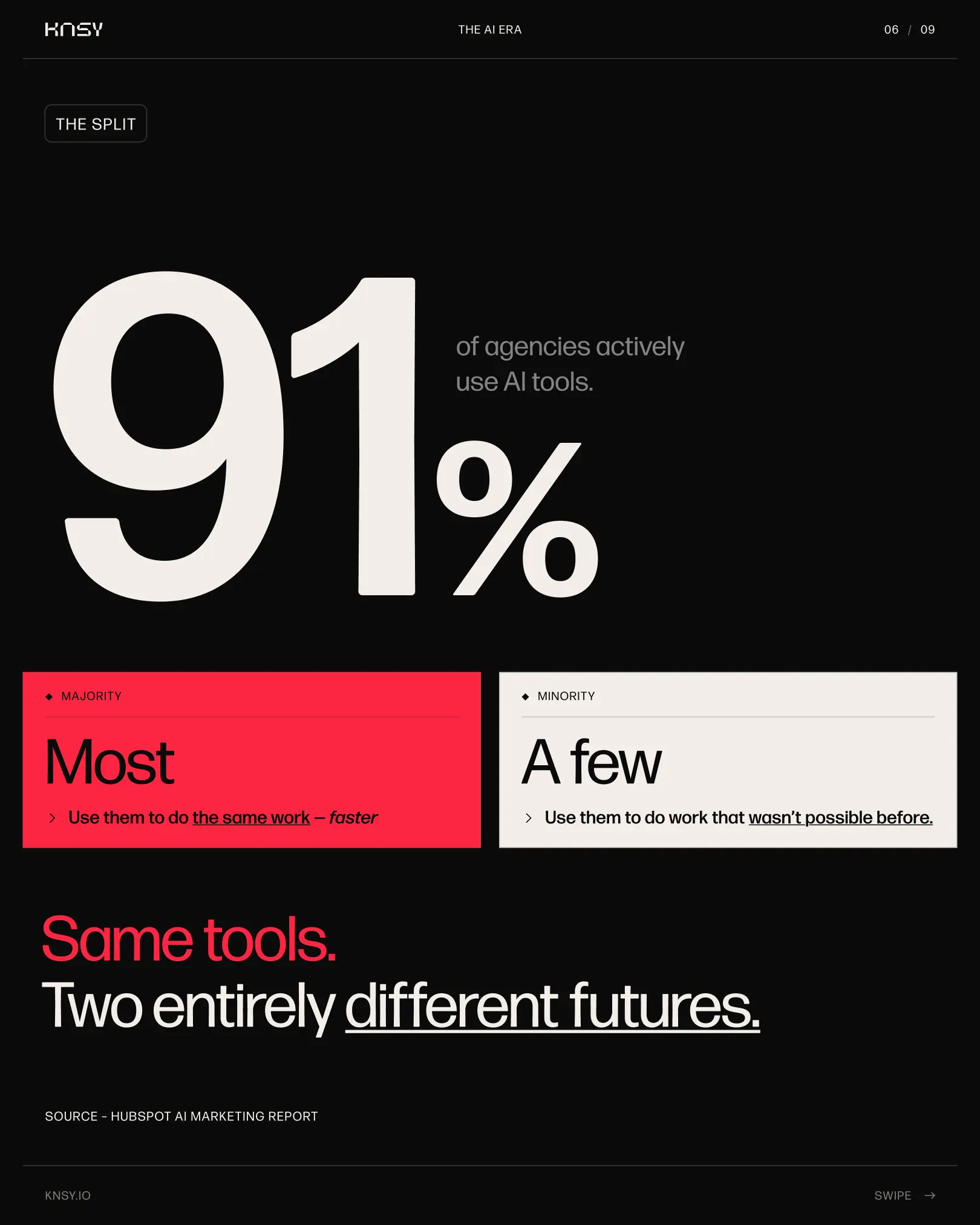
HubSpot's AI Marketing Report puts it plainly. 91% of agencies actively use AI tools. But there is a split happening inside that number that most people are not paying attention to.
The majority are using AI to do the same work faster. Same briefs, same outputs, same thinking, just produced at a fraction of the time and cost. That is efficiency, and it is not nothing. But it is also not an advantage, because everyone has access to the same tools.
The minority are using AI to do work that was not possible before. Not to speed up existing processes, but to unlock entirely new ones. To build things that could not have been built before. To serve clients in ways that were previously too complex, too expensive, or too slow to execute.
Same tools. Two entirely different futures.
Gartner's research maps this out with uncomfortable clarity. Production costs down 88%. Variation down 72%. Research down 54%. The things businesses used to charge premium rates for are collapsing in value.
But at the other end of the chart, something different is happening. Communication, positioning, systems thinking, and judgment and taste are all increasing in value. Not because they are harder to find, but because they are harder to replicate. An AI can produce a thousand variations of a piece of work. It cannot tell you which one is right, why it is right, or how it connects to a broader strategy that actually moves a business forward.
That is still a human job. And it is becoming more valuable by the month.
This is where it gets uncomfortable for a lot of businesses. If your value proposition has always been based on output, how much you can produce, how quickly, at what cost, then AI has not just disrupted your pricing. It has disrupted your reason to exist.
The agencies, studios, and service businesses that will struggle are the ones that leaned into volume without ever building depth.
The ones that will thrive are the ones that always led with judgment, and can now use AI to amplify the quality and speed of what they deliver without compromising what makes it worth paying for.
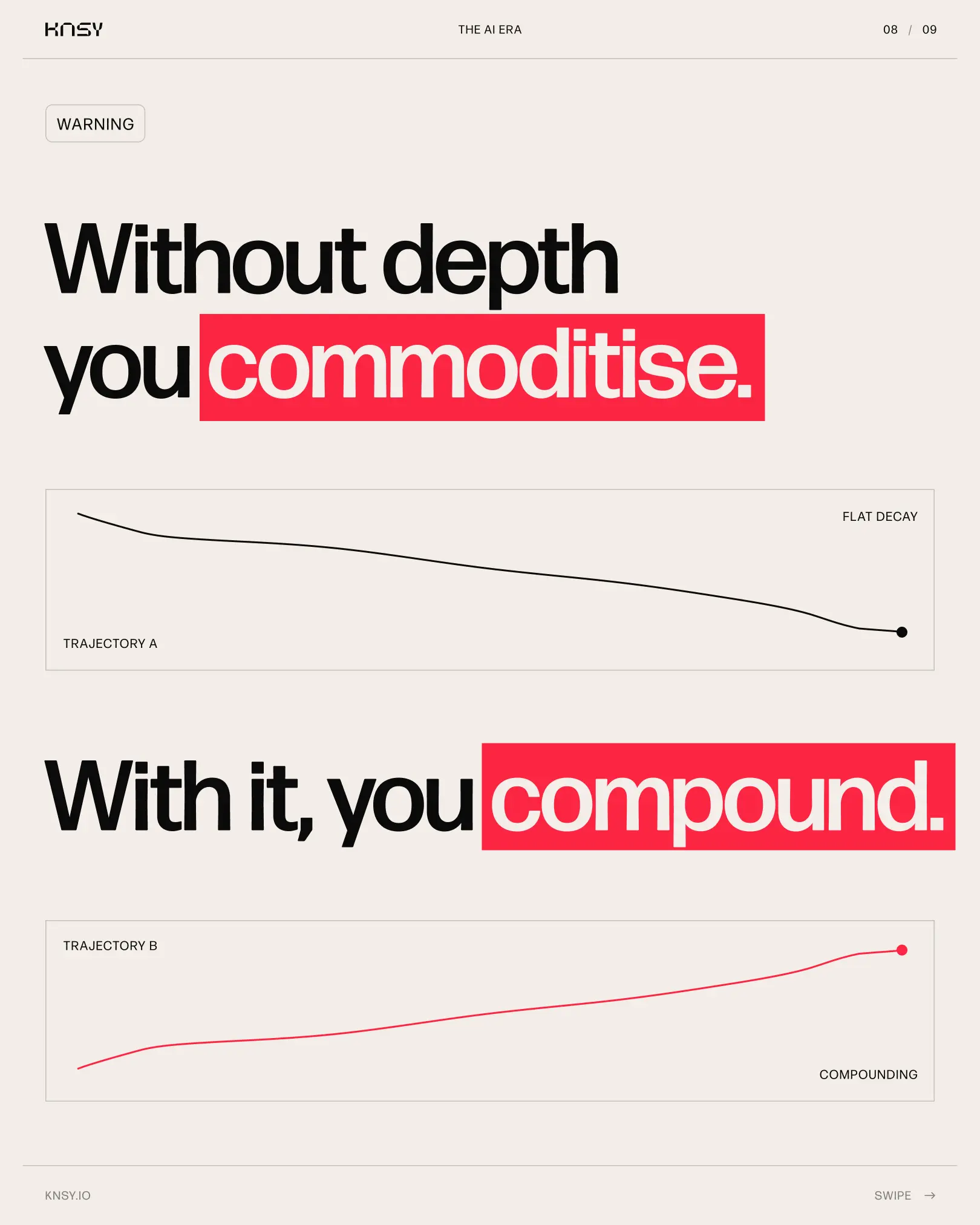
Without depth, you commoditise. With it, you compound. That trajectory is not a prediction. It is already playing out.
The fear around AI replacing creative and strategic workers is largely misplaced. The real displacement is happening at the average. Work that was indistinguishable from the next person's work, produced by people or agencies without a clear point of view, without a system, without taste. That work is now being automated. Not by AI replacing the human, but by AI making the human unnecessary if they were never adding anything irreplaceable to begin with.
The best operators, the sharpest strategists, the agencies with genuine craft and clear thinking are not threatened by any of this. They have access to the same tools as everyone else, and they know what to do with them. That asymmetry is what separates the compounding trajectory from the flat decay.